
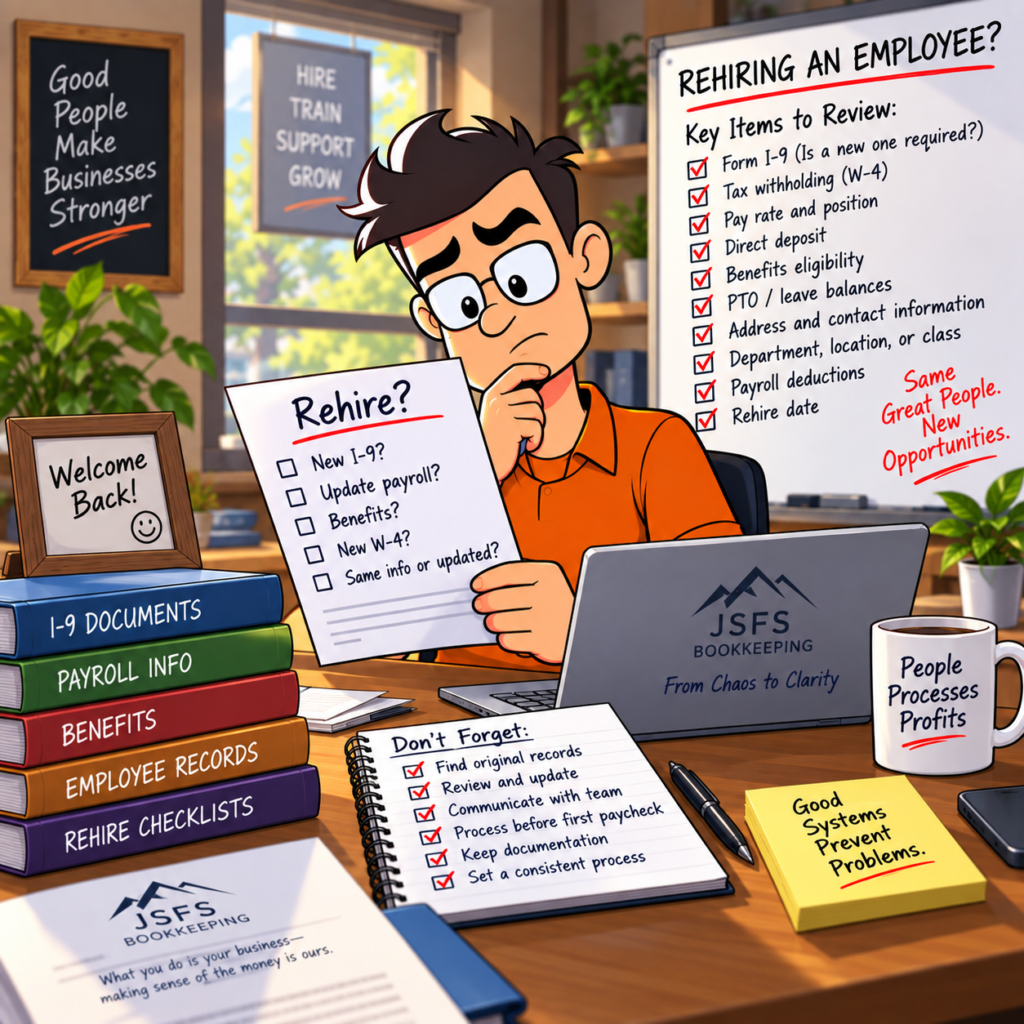
An employee leaves your company.
Six months later, things change and you hire them back.
You already have their information somewhere. But now the questions start:
Do we need another W-4?
Do we need to add them to payroll again?
What about direct deposit?
Benefits?
And do we need to complete an entirely new Form I-9?
This is a good example of why a simple rehire can turn into a surprisingly complicated administrative process.
A Rehire Isn’t Always the Same as a New Hire
The Form I-9 is used to document an employee’s identity and authorization to work in the United States.
When a former employee returns, employers shouldn’t automatically assume that they must either start completely over or simply reuse everything from the employee’s previous employment.
The correct process can depend on circumstances such as how much time has passed since the original Form I-9 was completed and whether the original documentation remains valid.
That makes the first step very simple:
Find the employee’s original records before creating new ones.
HR Records and Payroll Records Need to Agree
This is where HR administration and payroll often collide.
Even if you determine that an existing I-9 can be used or updated, you still need to review the employee’s payroll information.
A returning employee may have:
- A different pay rate
- A different position
- A new address
- Different tax withholding elections
- New bank information
- Different benefit elections
- A different work location
- A different department or class for accounting purposes
Don’t assume that because someone worked for you before, all of their old information is still correct.
Create a Rehire Checklist
Small businesses don’t necessarily need complicated HR systems to create good processes.
A basic rehire checklist can prevent a lot of problems.
Before putting a returning employee back on payroll, review their:
- Employment eligibility documentation
- Federal and state withholding information
- Current address and contact information
- Direct-deposit authorization
- Pay rate and compensation structure
- PTO or leave eligibility
- Benefits eligibility
- Department, location, class, or job assignment
- Workers’ compensation classification
- Payroll deductions
Also make sure you know the employee’s actual rehire date.
That sounds obvious, but dates matter in payroll and HR.
Don’t Just Reactivate an Old Employee and Move On
Most payroll systems make it relatively easy to reactivate a former employee.
Easy doesn’t necessarily mean complete.
Before processing that first paycheck, take a few minutes to look through the employee record. Old deductions, outdated bank accounts, previous garnishments, or obsolete accounting classifications can create problems surprisingly quickly.
A clean payroll process starts with clean employee information.
Build the Process Before You Need It
Many small businesses create procedures after something goes wrong.
Someone gets rehired, a payroll issue appears, and then a checklist gets created.
There is a better way.
If you have employees, create both a new-hire checklist and a rehire checklist now. They don’t need to be complicated. They simply need to make sure the same important questions are answered every time.
Good processes don’t eliminate every problem.
They dramatically reduce the number of problems you have to solve later.
That’s something we see constantly in bookkeeping and payroll. A few minutes spent getting information right at the beginning can save hours of cleanup later.
At JS Full Service Bookkeeping, we believe the best financial systems are the ones that help prevent chaos rather than simply document it afterward.
From Chaos to Clarity.
Form I-9 requirements are administered by the federal government. This article provides general information, not legal or immigration advice. Employers should consult current USCIS guidance or a qualified professional regarding their particular circumstances.