
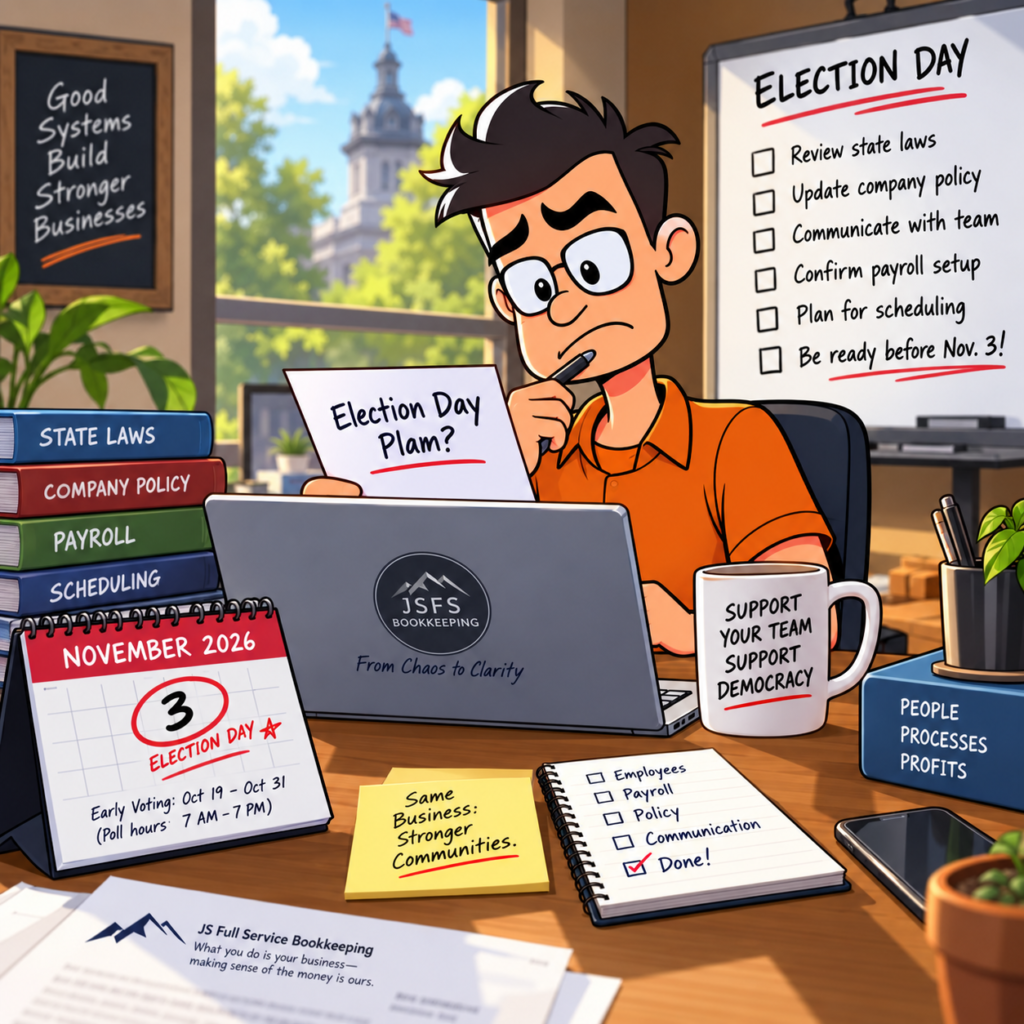
Election Day has a way of sneaking up on us. For small-business owners, it can also create a question that may not come up very often:
What are my responsibilities if an employee needs time away from work to vote?
Like many employment questions, the answer is not the same everywhere.
Voting-leave requirements vary by state. Some states require employers to provide employees with time away from work to vote under certain circumstances, and the rules regarding notice, how much time must be provided, and whether that time must be paid can differ.
That means the first mistake a business owner can make is assuming that a policy that worked in one state—or at another company—automatically applies to their business.
What About South Carolina?
For our South Carolina clients, there is an important distinction.
South Carolina does not have a general state law requiring private employers to give employees time off to vote. South Carolina’s regulations for state employees also state that there is no state or federal law generally mandating voting leave, although state agencies have discretion to authorize paid leave in certain circumstances.
That does not mean employers should simply ignore the issue.
South Carolina provides early voting for registered voters. For the November 3, 2026 statewide general election, early voting is scheduled for October 19 through October 31, with centers open from 8:30 a.m. to 6:00 p.m. Monday through Saturday, except Sunday, October 25. Election Day polls are open from 7:00 a.m. until 7:00 p.m.
Employers with employees in other states need to check the laws applicable to those employees rather than relying on South Carolina’s rules.
This Is Also a Payroll Question
This is where something that sounds like an HR issue can quickly become a bookkeeping and payroll issue.
If an employee takes time away from work to vote, you may need to determine:
- Whether the time is paid or unpaid
- How the time should be recorded
- Whether the employee should use PTO
- Whether your payroll system has the appropriate earnings or leave category
- Whether your written policy agrees with what is actually happening in payroll
The important thing is to figure this out before Election Day.
You don’t want a manager making one decision for one employee while another manager handles the same situation differently.
Review Your Policy Before You Need It
This is a good time to review your employee handbook or written policies.
Ask yourself a few simple questions:
Does our policy address voting leave?
Does it comply with the laws of every state where we have employees?
Do our managers know what the policy says?
Does our payroll system have a way to properly record the time?
Have employees been told whom to contact if they need a schedule adjustment?
If you aren’t sure about the legal requirements that apply to your employees, this is one of those situations where getting advice from an HR professional or employment attorney can prevent a relatively simple question from becoming a larger problem.
Good Processes Prevent Last-Minute Problems
One of the things I regularly tell business owners is that good bookkeeping isn’t just about entering transactions.
The same principle applies throughout your business.
Good systems mean thinking about predictable situations before they happen.
Election Day happens on a schedule. Payroll happens on a schedule. Employee scheduling happens on a schedule.
Taking a few minutes now to make sure those systems work together can save you from trying to solve the problem while payroll is being processed.
At JS Full Service Bookkeeping, our role isn’t to provide legal advice. Our role is to help make sure that once you know how something should be handled, your bookkeeping and payroll processes accurately reflect it.
From Chaos to Clarity. That’s what good systems are supposed to do.
This article provides general business information and is not legal advice. Employers should consult qualified HR or legal professionals regarding requirements applicable to their employees and locations.